|
|
|
|
|
Cell Press Live:植物与动物的早期胚胎发育 |
|
|
直播时间:
2026年8月19日(周三)20:00-22:15
直播平台:
科学网APP
https://weibo.com/l/wblive/p/show/1022:2321325332943693807695
(科学网微博直播间链接)
科学网微博
科学网视频号
【直播简介】
2026年,Developmental Cell迎来创刊25周年。在生命的起点,植物与动物早期胚胎发育呈现出截然不同的形态与路径,却也共享着许多深层调控逻辑。Cell Press长期关注早期发育、细胞命运决定与表观遗传调控等关键科学问题。从合子基因组激活到表观遗传重塑,跨物种交流正在为理解胚胎发育的基本规律带来新的视角。
本次Cell Press Live线上研讨会,Cell与Developmental Cell联袂特邀请颉伟、郑丙莲、孙蒙祥、王红梅四位植物与动物早期胚胎发育领域的专家,通过报告和圆桌讨论的形式,围绕领域内的最新进展与挑战,以及不同研究体系之间的启发与借鉴展开交流,并与大家共同庆祝Developmental Cell创刊25周年。
扫描二维码,免费注册参会:
【嘉宾简介】
颉伟
清华大学
▌个人简介:
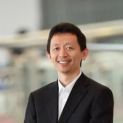
颉伟博士现为清华大学生命科学学院教授、副院长。2003年本科毕业于北京大学生命科学学院。2008年在美国加州大学洛杉矶分校分子生物学系完成了博士学习,同时获得了统计学的硕士双学位。之后在美国加州大学圣地亚哥分校完成博士后训练。2013年加入清华大学生命科学学院任研究员,同时入选清华-北大生命科学联合中心。颉伟应用多学科交叉方法研究生命起始时期早期胚胎发育过程中表观遗传信息的传递、建立和调控;开发和建立了一系列微量细胞高灵敏染色质分析技术;在分子水平阐明了哺乳动物亲代表观基因组如何建立,亲代-子代如何转换,子代表观基因组如何重建等一系列问题。他的研究成果包括发现RNA聚合酶II在受精后经历结合-预配置-延伸阶段,并鉴定出一系列人类和小鼠早期胚胎发育的核心转录因子,包括启动基因组激活的TPRX/OBOX 基因等。颉伟共发表高水平论文100多篇,引用数超过20,000次,包括以第一或通讯作者身份在Nature,Science,Cell发表多篇论文。曾入选香港求是杰出青年学者,国家基金委杰出青年基金、美国霍华德休斯医学研究所(HHMI)国际研究学者、谈家桢生命科学创新奖、树兰医学青年学者、中源协和生命科学创新奖、中国青年科技奖、第一届科学探索奖、第一届新基石研究员等。曾任科学杂志评审编辑,现任国际干细胞协会理事、中国动物学会副理事长等。
▌报告主题:
哺乳动物早期发育中的表观遗传信息传递与重编程
▌报告摘要:
Drastic transcription and epigenetic reprogramming occur during mammalian early embryogenesis. Deciphering the molecular events underlying these processes is crucial for understanding how life really begins. Probing these questions was previously hindered by the scarce experimental materials that are available from early embryos. By developing a set of ultra-sensitive chromatin analysis technologies, we investigated epigenetic reprogramming during early mouse development for chromatin accessibility, histone modifications, and 3D chromatin architecture. These studies unveiled highly dynamic and non-canonical chromatin regulation during the maternal-to-zygotic transition. Recently, we also identified a number of key transcription factors (TFs) that govern mammalian zygotic genome activation (ZGA) and the first cell fate commitment. However, how the embryonic transcription program is established with the non-canonical, immature chromatin states, and how the embryonic epigenomes are correctly restored still remain enigmatic. In this talk, I will present data on how the embryonic epigenomes are properly re-established and how the embryonic transcription program is executed during this dramatic transition in early mammalian development.
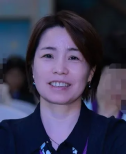
郑丙莲
复旦大学
▌个人简介:
郑丙莲,复旦大学特聘教授、博导。国家杰青。担任中国植物生理学会常务理事、中国细胞学会植物分会副会长、中国植物学会生殖分会副主任、中国生化学会RNA分会委员、中国遗传学会表观分会委员等。长期聚焦探索植物非编码RNA如何产生、如何发挥作用以及在植物生殖发育过程中发挥何种作用。以通讯作者在Science, Mol Cell, Dev Cell, Plant Cell, PNAS等期刊发表30余篇研究论文,并受邀在Nuclei Acids Res等发表综述论文。多次主持国家自然科学基金重点项目、中德合作项目、科技部重点研发计划子课题等。
▌报告主题:
精细胞携带的生物大分子在早期种子发育中的作用
▌报告摘要:
Fertilization merges paternal and maternal genomes into the zygote and endosperm, initiating zygotic genome activation and driving embryogenesis and endosperm development—an essential transition from the gametophytic to the sporophytic generation in plants. A longstanding but unanswered question concerns what sperm prepares for fertilization, how paternal factors are selectively allowed to regulate post-fertilization development, and how parental contributions coordinate to lay the molecular groundwork for offspring development. In my presentation, I will show how an active RNA-based epigenetic reprogramming event occurs during sperm cell formation and how sperm-derived factors are selectively allowed to trigger early endosperm proliferation, early zygote elongation, and subsequent embryogenesis. For example, a specific miRNA delivered by sperm triggers the first central cell proliferation by degrading a maternal roadblock factor. In contrast, an active maternal proteasome acts as a gatekeeper that selectively clears harmful sperm-delivered factors to drive the initiation of seed development. Collectively, these findings demonstrate that sperm not only provides genetic information (DNA), but also transmits other specific biomolecules essential for normal offspring development.
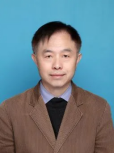
孙蒙祥
武汉大学
▌个人简介:
孙蒙祥,武汉大学教授、博导,国家“杰出青年基金”获得者。主要研究领域为植物生殖发育,具体方向为被子植物受精与早期胚胎发生的分子机制。长期关注受精后父母亲本遗传信息在胚胎发生中的作用。先后在Nature, Cell, Nature Plants, Dev Cell 等刊物发表论文130篇。
▌报告主题:
植物早期胚胎发生:问题与挑战
▌报告摘要:
In both animal and plants, maternal and paternal genetic information is integrated into zygotic genome after male and female gamete fusion during fertilization. During the last decade, we have put great effort to elucidate what happens after fertilization with special interest in parental contributions to the transcriptome of early embryos and specific roles of the paternal- or maternal-of-origin genes in fertilization and early embryogenesis. Here,we discuss some of critical questions, e.g.zygotic genome activation, embryogenesis initiation, and parental contributions to early embryogenesis, as well as technical challenges for answering these questions.
王红梅
中国科学院动物研究所
▌个人简介:
王红梅研究员,中国科学院动物研究所副所长,博士生导师。干细胞与生殖生物学国家重点实验室前主任,中国动物学会生殖生物学分会主任委员,英国剑桥大学胎盘研究中心学术委员会委员。国家杰出青年基金项目获得者,国家自然科学基金重大项目、创新研究群体项目负责人,国家重点研发计划项目负责人。担任Stem Cell Rep副主编,Cell Stem Cell、Dev Cell等期刊编委。长期围绕灵长类胚胎发育规律解析与体外模拟展开研究,相关工作发表在Science、Nature、Cell(4篇)等,入选Nat Methods年度方法、2023中国生命科学十大进展,多次受邀在Nat Reviews等期刊发表综述,在国际干细胞学会年会Anne McLaren Memorial Lecture做主旨报告。曾获国家自然科学二等奖、中国科学院杰出科技成就奖、谈家桢生命科学创新奖等。
▌报告主题:
灵长类胚胎孕育规律解析与体外模拟
▌报告摘要:
Development begins with a fundamental question: how do cells sharing the same genome acquire distinct identities, organize in space and time, and build a functional organism? Although these principles are shared across developmental systems, early human and primate embryogenesis remains uniquely difficult to study because of ethical, technical, and biological constraints. Our work uses primate embryos, placental tissues, stem cell-based models, and organoid systems to define and reconstruct the rules that govern early development.
By combining extended in vitro culture of cynomolgus embryos with staged in vivo references, we have resolved key transitions from gastrulation to early organogenesis, including primitive streak formation, axial patterning, germ-layer specification, and early neurodevelopmental morphogenesis. Because mammalian development depends critically on extraembryonic tissues, we further investigated primate placental development using single-cell multi-omics, revealing trophoblast and stromal lineage trajectories, regulatory programs at the maternal-fetal interface, and cellular events such as trophoblast fusion, epithelial-mesenchymal transition, and trophoblast-endometrium communication.
Building on these in vivo frameworks, we established trophoblast organoids, stem cell-based embryo models, and co-culture systems with endometrioids to reconstruct implantation and early developmental processes in vitro. These models are not simply substitutes for embryos; they provide experimentally tractable systems to test developmental principles, model pregnancy failure, and explore therapeutic strategies. Looking forward, such platforms may also help us understand how extreme environments, including space-related conditions, influence human development and multi-organ physiology. Together, our studies move from observing primate development to decoding, reconstructing, and challenging the fundamental logic by which life builds itself.
特别声明:本文转载仅仅是出于传播信息的需要,并不意味着代表本网站观点或证实其内容的真实性;如其他媒体、网站或个人从本网站转载使用,须保留本网站注明的“来源”,并自负版权等法律责任;作者如果不希望被转载或者联系转载稿费等事宜,请与我们接洽。