
斯隆凯特琳学院Karuna Ganesh小组的一项最新研究认为ZFP36L2在再生和癌症中协调应力适应性可塑性。该项研究成果发表在2026年8月5日出版的《自然》上。
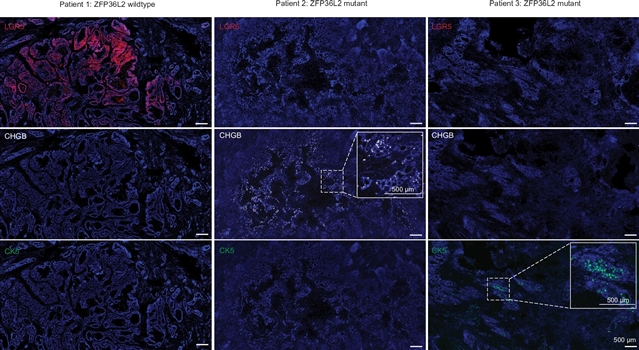
在这里,研究人员发现在5-10%的CRC中发生突变的RNA结合蛋白ZFP36L2是动态去分化的关键应激响应协调者。在无主题结肠再生模型中,ZFP36L2消融抑制去分化、ISC基因表达和功能,并损害肠道再生。在人类结直肠癌中,ZFP36L2功能的丧失取消了转移播种和LGR5+典型转移的生长,同时促进谱系可塑性和非典型分化为异质细胞状态。
从机制上讲,ZFP36L2结合到含有富AU 3' 非翻译区,诱导形成与mRNA降解和应激反应终止相关的动态生物分子凝聚体。总之,这些数据表明ZFP36L2作为一个重要的分子开关,将应力传感与表型可塑性耦合在一起。这反过来又驱动细胞去分化,这对于在伤口愈合和转移过程中重建ISC状态至关重要。在ZFP36L2缺失的CRC中,在转移生长过程中无法重新进入LGR5+状态会促进非规范谱系可塑性,这与不良的临床结果相关。
据介绍,表型可塑性是癌症的一个特征;然而,人们对细胞命运重编程所需的分子开关知之甚少。在肠创面愈合和结直肠癌(CRC)转移过程中,分化的细胞可以动态去分化为肠干细胞(肠干细胞)状态,从而驱动上皮再生和转移性生长。
附:英文原文
Title: ZFP36L2 orchestrates stress-adaptive plasticity in regeneration and cancer
Author: Jiang, Qingwen, Raghavan, Manisha S., Rodriguez, Aileen M., Lallo, Morgan, Tam, Cyrus L., Hartner, Saskia, Forsyth, Britney, Mahmoud, Ahmed, Zincke, Fabian, Zhao, Huiyong, Moorman, Andrew, Balkaran, Sasha, Luckett, Kathleen, Pintar, Jura, Romin, Yevgeniy, Chan, Eric, Santella, Anthony, Mdl, Bernadette, Shah, Farheen, Baali, Ilyes, Kharas, Michael G., de Stanchina, Elisa, Urganci, Nil, Shia, Jinru, Peer, Dana, Sanchez-Vega, Francisco, Koche, Richard, Morris, Quaid, Chan, Joseph M., Ganesh, Karuna
Issue&Volume: 2026-08-05
Abstract: Phenotypic plasticity is a hallmark of cancer1; however the molecular switches required for cell-fate reprogramming are poorly understood. During intestinal wound-healing and colorectal cancer (CRC) metastasis, differentiated cells can dynamically dedifferentiate into an intestinal stem cell (ISC) state to drive epithelial regeneration and metastatic outgrowth2,3,4,5,6,7,8,9,10. Here we show that the RNA-binding protein ZFP36L2, which is mutated in 5–10% of CRC11,12,13,14,15, is a pivotal stress-responsive orchestrator of dynamic dedifferentiation. In mouse colon regeneration models, ZFP36L2 ablation inhibits dedifferentiation, ISC gene expression and function and impairs intestinal regeneration. In human CRC, loss of ZFP36L2 function abrogates metastatic seeding and the outgrowth of LGR5+ canonical metastases while promoting lineage plasticity and non-canonical differentiation into heterogeneous cell states. Mechanistically, ZFP36L2 binds to stress-associated mRNAs that contain AU-rich 3′untranslated regions, which induces the formation of dynamic biomolecular condensates associated with mRNA degradation and termination of the stress response. Together, these data show that ZFP36L2 acts as an important molecular switch that couples stress sensing with phenotypic plasticity. This in turn drives cellular dedifferentiation essential for re-establishing the ISC state during wound healing and metastasis. In ZFP36L2-deficient CRC, the inability to re-enter the LGR5+ state during metastatic outgrowth promotes non-canonical lineage plasticity, which is associated with poor clinical outcomes.
DOI: 10.1038/s41586-026-10890-0
Source: https://www.nature.com/articles/s41586-026-10890-0
Nature:《自然》,创刊于1869年。隶属于施普林格·自然出版集团,最新IF:69.504
官方网址:http://www.nature.com/
投稿链接:http://www.nature.com/authors/submit_manuscript.html