
美国弗吉尼亚大学Ali D. Güler课题组的研究开发出了新一代减肥药抑制小鼠大脑奖赏回路。相关论文于2026年5月6日发表于国际顶尖学术期刊《自然》杂志上。
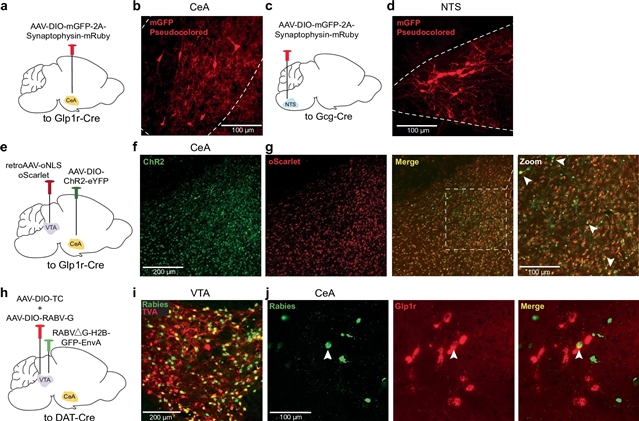
在这里,课题组研究人员建立了人源化GLP1R小鼠模型来研究小分子GLP1RAs如何影响摄食行为。该团队发现这些化合物通过平行的神经回路调节稳态和享乐进食。除了参与控制代谢稳态的典型下丘脑和后脑网络外,GLP1RAs还招募了中央杏仁核中表达GLP1RAs的离散神经元,这些神经元通过减少伏隔核中多巴胺的释放来选择性地抑制美味食物的消耗。刺激这些中央杏仁核神经元会减少快感摄食,而在该细胞群中靶向删除受体会特异性地降低GLP1RAs对奖励驱动摄食的厌食效果。这些发现确定了小分子GLP1RAs调节奖励处理的神经回路,这对治疗物质主题障碍和暴饮暴食具有启示意义。
据悉,胰高血糖素样肽1受体激动剂(GLP1RAs)有效减轻体重和改善代谢结果;然而,现有的基于肽的疗法需要注射,而且制造起来很复杂。小分子GLP1RAs有望口服生物利用度和规模化生产,但它们与人类和啮齿动物受体的选择性结合机制研究有限。
附:英文原文
Title: A brain reward circuit inhibited by next-generation weight-loss drugs in mice
Author: Godschall, Elizabeth N., Gungul, Taha Bugra, Sajonia, Isabelle R., Buyukaksakal, Aleyna K., Li, Orien, Ogilvie, Sophia, Keeler, Austin B., Tian, Guilian, Shi, Yu, Koita, Omar, Guo, Chloe Xinzhu, Deutsch, Tyler C. J., Steacy, Eric J., Crook, Maisie, Zhang, YuChen, Conley, Nicholas J., Memi, Gulsun, Webster, Addison N., Yipkin Calhan, O., Liu, Weile, Akkoub, Amani, Malik, Karan, West, Kaleigh I., Michel-Le, Sara, Karthikeyan, Arun, van Gerven, Grace, DellAglio, Olivia A., Beier, Kevin T., Zweifel, Larry S., Patel, Manoj K., Campbell, John N., Deppmann, Christopher D., Gler, Ali D.
Issue&Volume: 2026-05-06
Abstract: Glucagon-like peptide 1 receptor agonists (GLP1RAs) effectively reduce body weight and improve metabolic outcomes; however, established peptide-based therapies require injections and are complex to manufacture1,2,3. Small-molecule GLP1RAs promise oral bioavailability and scalable manufacturing, but their selective binding to human versus rodent receptors has limited mechanistic studies4,5,6,7,8,9. Here we developed humanized GLP1R mouse models to investigate how small-molecule GLP1RAs influence feeding behaviour. We found that these compounds regulate both homeostatic and hedonic feeding through parallel neural circuits. Beyond engaging canonical hypothalamic and hindbrain networks that control metabolic homeostasis, GLP1RAs recruit a discrete population of Glp1r-expressing neurons in the central amygdala, which selectively suppress the consumption of palatable foods by reducing dopamine release in the nucleus accumbens. Stimulating these central amygdalar neurons curtails hedonic feeding, whereas targeted deletion of the receptor in this cell population specifically diminishes the anorectic efficacy of GLP1RAs for reward-driven intake. These findings identify a neural circuit through which small-molecule GLP1RAs modulate reward processing, with implications for the treatment of substance-use disorder and binge eating.
DOI: 10.1038/s41586-026-10444-4
Source: https://www.nature.com/articles/s41586-026-10444-4
Nature:《自然》,创刊于1869年。隶属于施普林格·自然出版集团,最新IF:69.504
官方网址:http://www.nature.com/
投稿链接:http://www.nature.com/authors/submit_manuscript.html